Australia’s record housing correction has seen dwelling values across the five major capital city markets decline by 8.8% since early April.
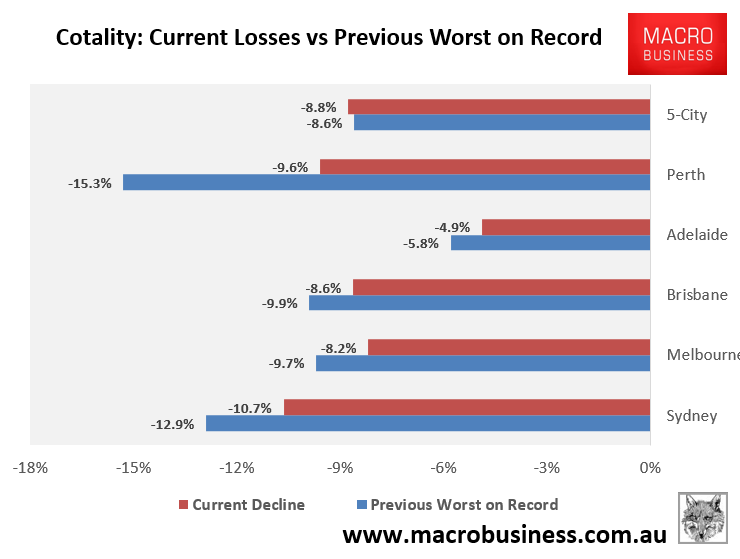
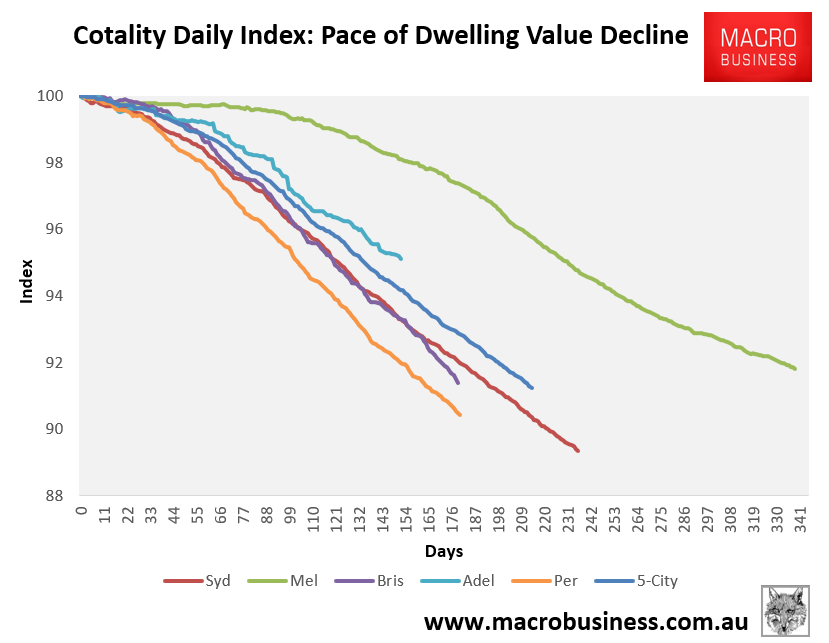
At the current pace of -4.7% per quarter, values are likely to be down by 10% across the five major capital cities by Christmas.
Tim Reardon, chief economist at the Housing Industry Association (HIA), believes that dwelling values will rebound swiftly in the new year:
Reardon told 7News that home prices are likely to rebound “very quickly” because “we have pent-up demand for housing stock, strong population growth, and we have low unemployment”.
“I would suggest for anybody looking for a new home, they have a window that closes some time shortly after Christmas this year”.
Reardon’s rebound call comes despite his forecast that interest rates will rise further amid rising oil prices and wage increases.
“I don’t think we are at the end of the rate-rising cycle. We are likely to see one early next year. Inflation has been incredibly difficult to slow”.
That statement alone should make Reardon’s call for a rebound after Christmas seem like wishful thinking.
The most important piece of data on this topic is shown below by Shane Oliver from AMP:
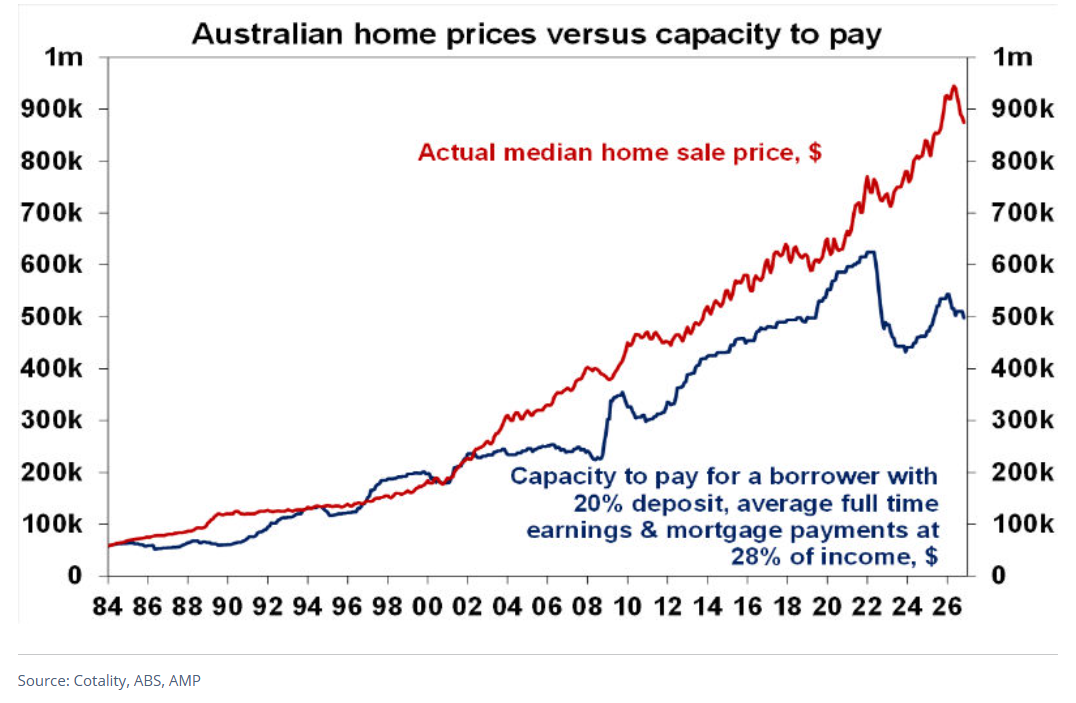
Oliver estimates that the gap between capacity to pay and home prices has never been wider, at around $400,000.
As a result, either one of two things (or a combination of both) needs to happen to bring home values into line with the capacity to pay:
- Interest rates must fall to increase borrowing capacity; and/or
- Prices must fall to bring values into line with borrowing capacity.
Given that Tim Reardon expects interest rates to rise further in early 2027, which would reduce borrowing capacity even further (i.e., lower the blue line above), a house price rebound after Christmas is highly unlikely. Instead, prices would fall further.
Another factor that Reardon has glossed over is that although there is pent-up (structural) demand for housing, actual market supply (i.e., the number of homes listed for sale) has ballooned, up 20.3% over the past 12 months across the combined capital cities, according to Cotality:
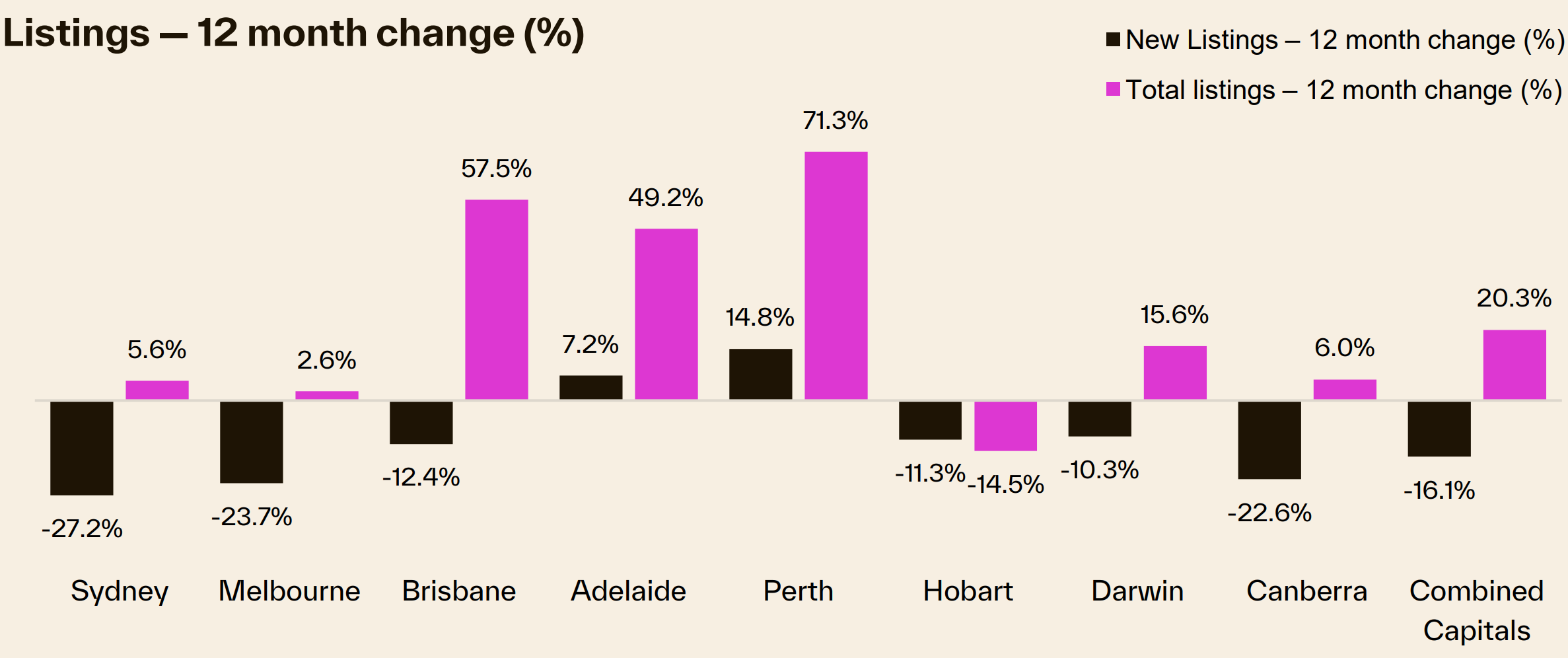
Source: Cotality
My expectation is that Australian dwelling values will continue to fall at least until mid-2027 and won’t bottom until the Reserve Bank commences a rate-cutting cycle.
However, even then, I don’t expect much of a rebound, with values likely to track roughly sideways for an extended period, as they have in New Zealand after its sharp correction.
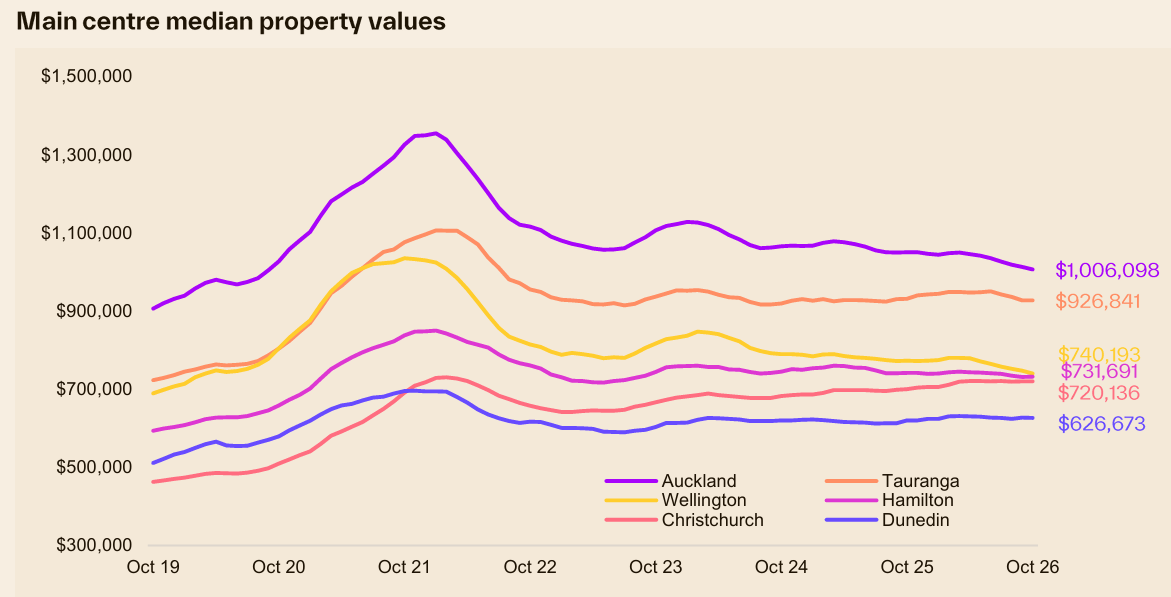
Source: Cotality
The game has changed. The 30-year supercycle of home prices, which has seen them forever reach higher peaks after dips, appears to be over.