Reserve Bank of Australia (RBA) Deputy Governor Andrew Hauser gave an interview at Citi’s Australia & New Zealand Investment Conference in Sydney on Wednesday.
Hauser warned that Australia’s “inflation outlook looks materially worse than we projected in the August report”, that “inflation has been high for a very long time now”, and that “people in the community are not sure if we’re going to bring inflation back into target at all”, which increases the possibility of an interest rate rise at the Bank’s next meeting in November.
Hauser is particularly concerned that inflation expectations may be becoming entrenched in the economy. Business surveys suggest that more firms now believe 3-3.5% inflation may be the “new normal”, which Hauser described as a “central banker’s nightmare”.
Hauser argued that letting inflation expectations drift higher would make inflation much harder to control in the future. He acknowledged that higher interest rates add financial stress to households already facing cost-of-living pressures but said the alternative could be worse:
“Even though we are laying shorter-term pain on top of pain, it’s to prevent a longer and potentially far worse pain down the track if inflation expectations get locked in”, he said.
Hauser also downplayed the latest rise in the unemployment rate, which is tracking well above the RBA’s expectations:
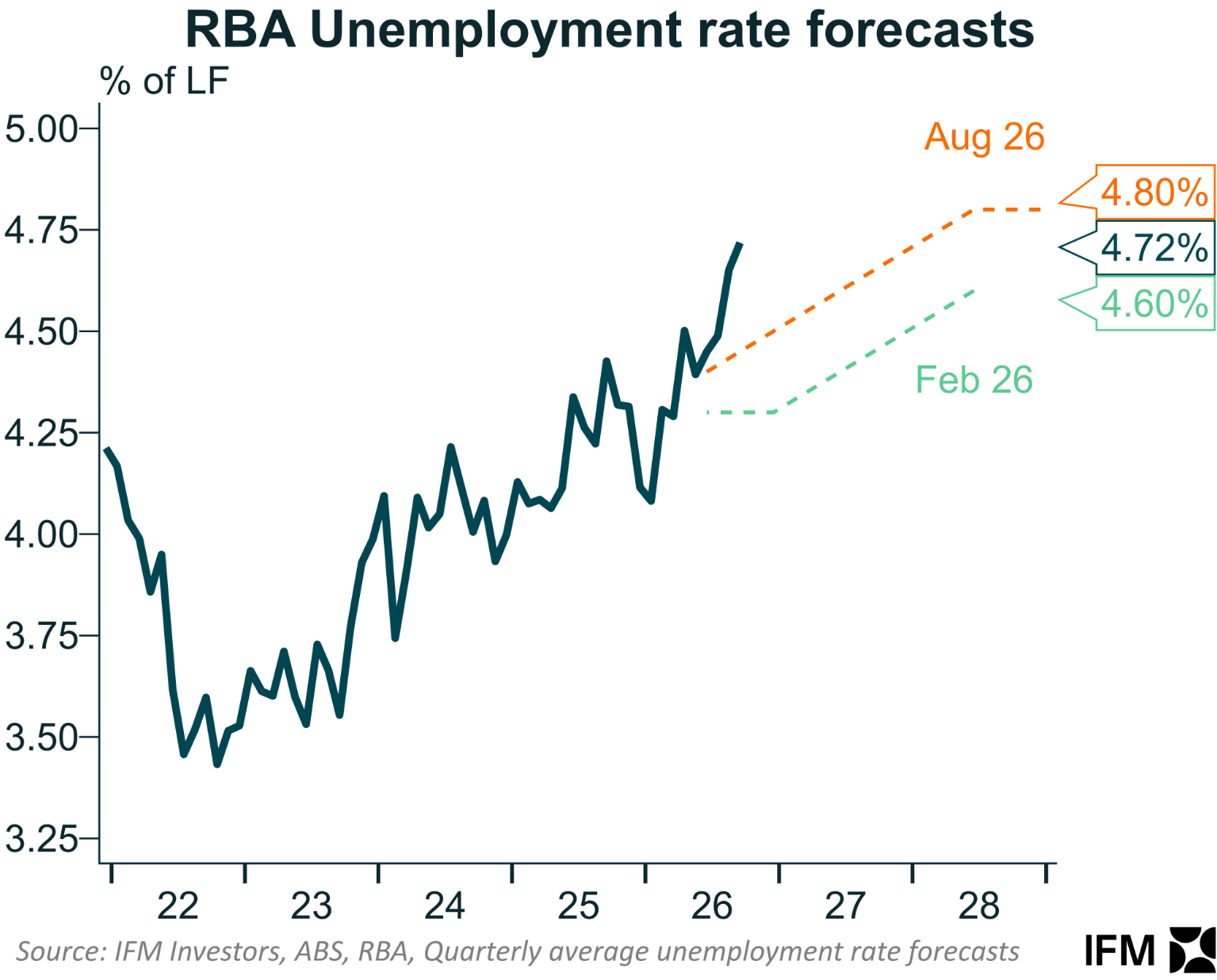
Chart by Alex Joiner (IFM Investors)
He said that there was potential “noise” in the numbers and that Australia’s unemployment numbers “are still right at the bottom or very near the bottom of G20 out-turns on labour markets”.
Hauser also suggested that higher unemployment was necessary to bring inflation back to within the RBA’s target.
As Alex Joiner, chief economist at IFM Investors, illustrates below, financial markets responded to Hauser’s testimony by raising the perceived chance of a November rate hike to around 42%, up sharply from below 20% the previous week.
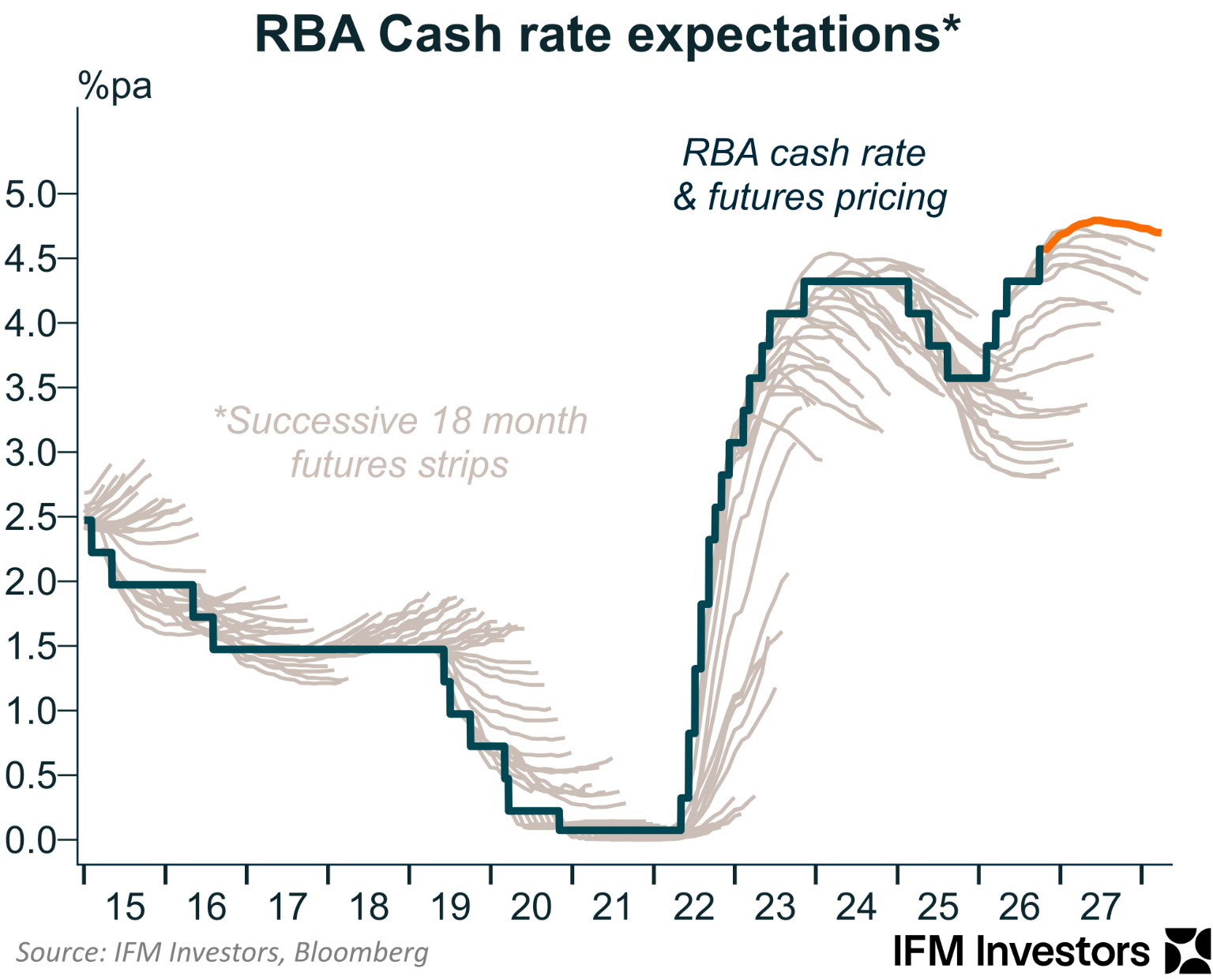
Chart by Alex Joiner (IFM Investors)
Hauser’s key message:
Hauser’s tone was notably hawkish. His overall message was that inflation is proving more persistent than expected, inflation expectations are beginning to drift higher, and the RBA remains prepared to tighten policy further if needed, even as unemployment rises and households remain under cost-of-living pressure.
As a result, the probability of a November rate hike has risen materially, reflected in market pricing.
The RBA will publish updated forecasts in its next Statement on Monetary Policy and announce its next interest-rate decision on 3 November.
Mortgage holders under stress:
With mortgage rates already nearing 7%, further interest rate increases are the last thing Aussie mortgage holders want to hear.
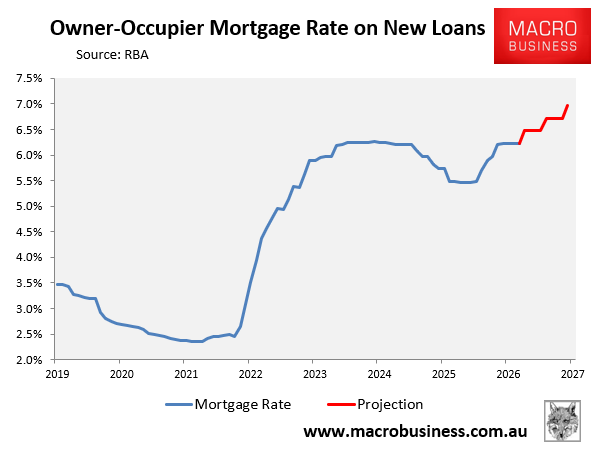
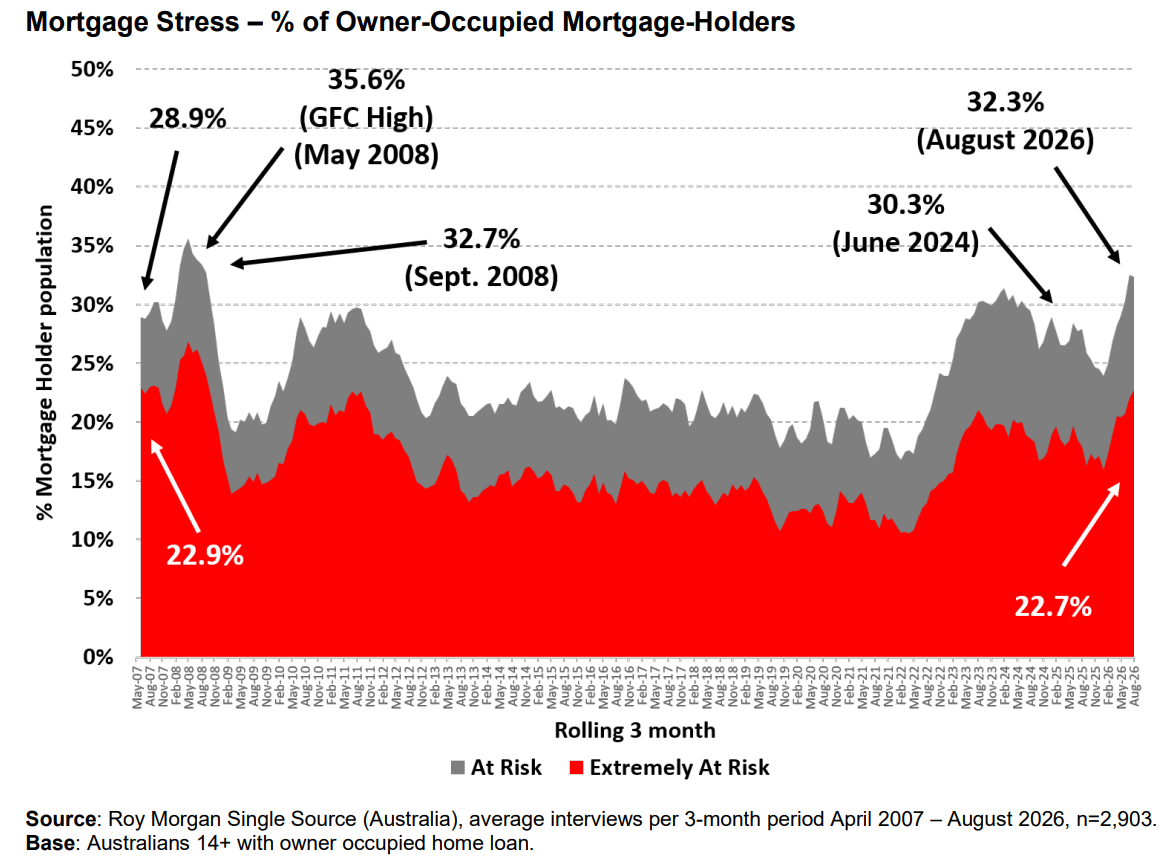
Roy Morgan’s mortgage stress survey suggests national mortgage stress is at its highest level since early 2008, when the cash rate was above 7%.
The percentage of household income spent on mortgage payments is also tracking at its highest level since 1989-90, when mortgage rates hit 17%:
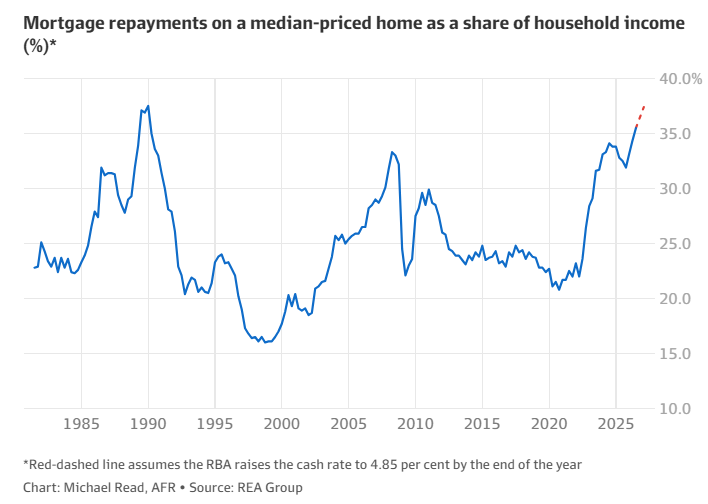
Add rising unemployment, and mortgage holders face their worst conditions since the early-1990s recession.